Improving Maternal Health through conditional cash transfers
Value for Money of Australia’ investments in the PKH programme in Indonesia
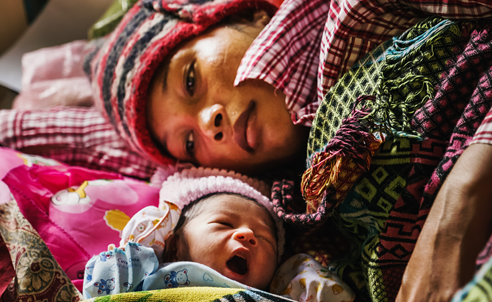
We led the Value for Money analysis of Indonesia’s PKH programme. This critical social programme provides cash assistance to the poorest households that include pregnant or lactating women, children under 15 years old or children between 16 and 18 years old who have not completed the nine years of basic education. The short-term objective of the programme was to alleviate the immediate poverty of the beneficiaries. The long-term objective was to break the intergenerational poverty cycle among the poorest households. It began operating in 2007 as a pilot programme.
With the support of Australia’s foreign aid, the Government of Indonesia (GOI) strengthened multiple dimensions of the PKH programmes, including its implementation, socialisation, social targeting and monitoring. All of this strongly contributed to convince the GOI to expand the programme both geographically and financially.
Based on a range of conservative hypotheses, we concluded that Australia’s investment of AUD 23.3 million supported a process of change whose Net Present Value (NPV) over ten years of operations stands at AUD 1.33 billion, highlighting a very high return on investment. This means that for every dollar spent by DFAT, 57 dollars of welfare benefits were generated that otherwise would not have occurred. Additionally, over the past years of reform, the cost-efficiency of PKH has improved. This VfM analysis led to further policy decisions in the PKH environment.