Managing Biodiversity in the Pantanal, Brazil
An evaluation of the Pantanal Regional Park Initiative and its Human Impact
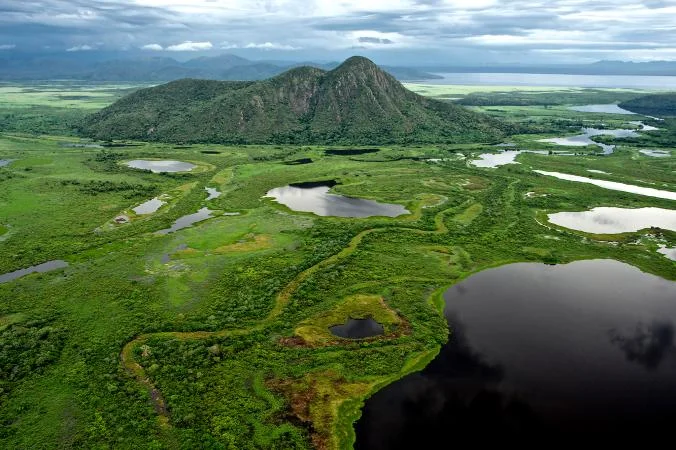
We led an in-depth evaluative research to inquire into how “community participation” (CP) played out in the creation of the Pantanal Regional Park (PRP), a large-scale participatory initiative launched in 1998 in the Brazilian portion of the world’s largest wetland.
Our work identifies the strategic significance of CP for the local landowners, who were supposed to be in the driver’s seat, and the containment of other emerging actors – such as conservationist NGOs and incoming economic actors. Meanwhile, the virtual absence of rural employees (peons) and other local community groups in the PRP process indicated additional forms of containment that reinforced the socio-political status quo of the region.
As it turned out, however, the PRP project was overtaken by a group of local politicians in pursuit of unofficial agendas. Power was thus displaced away from the landowners, and this disarticulation of governance eventually led to financial mismanagement and the PRP’s collapse.
Thus, in the PRP context, containment through CP was exercised in multiple and incoherent directions.
We explored in depth the mechanisms that fostered this unsatisfactory result, both in the project design and in the nature of the local social capital. We argue, however, that the PRP experience stimulated a learning process within the local community that may prove beneficial in the medium-term. This begs the question whether international donors are willing and able to support participatory projects through their (often unavoidable) ups and downs, trials and missteps – an approach directly opposed to their increasingly results-oriented professional culture.