The Political Economy of China’s Urban Expansion and its Climate Cost
Insights from Nanjing
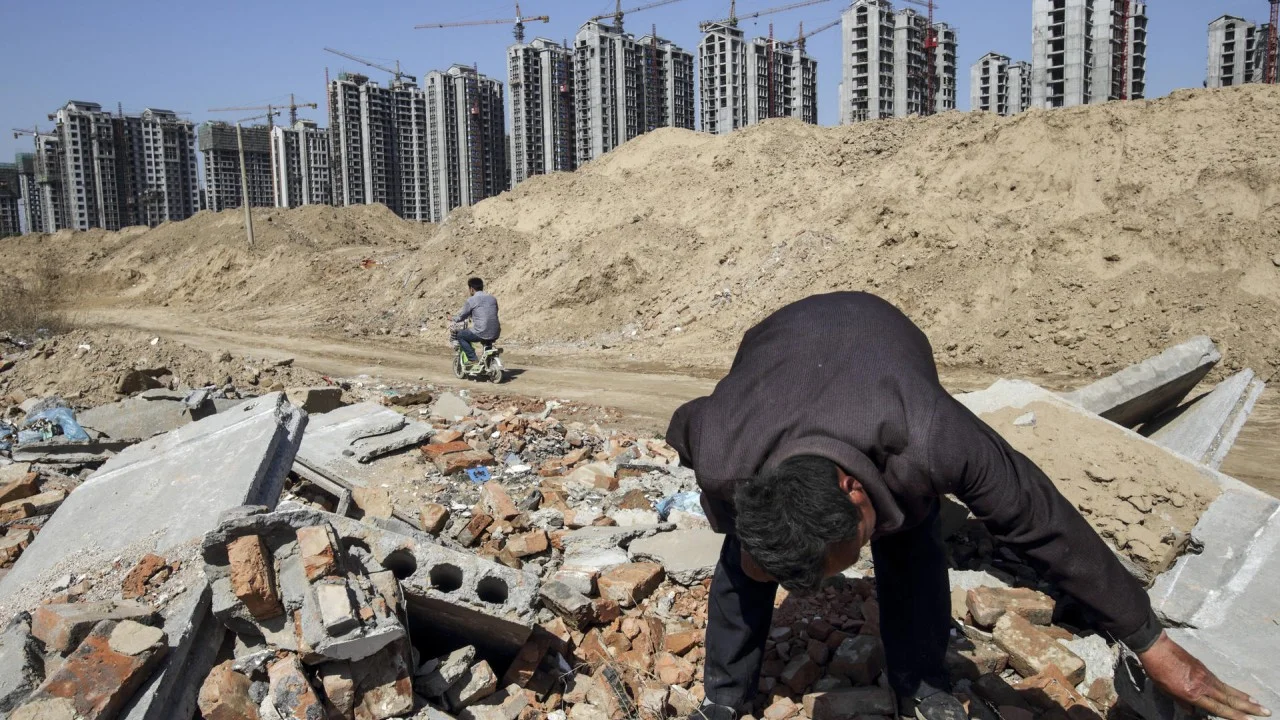
We researched along Dr. Jie Yu the political economy of China’s urban expansion through long term field work given its importance for the world at large. There is mystery. Over the past ten years, China’s urban population growth has been slowing down. Yet, urban built up areas have been expanding at a rising pace, about 25% faster than during the previous decade. This speeding up process is not explainable through either population or economic growth. This conclusion matches qualitative observations and stakeholders’ comments that urban constructions keep speeding up, prices keep rising and investors’ money keeps flowing into buildings that often remain empty.
To enquire into this, we carried out an in-depth case study on the conundrum of Nanjing’s super fast urban expansion. It goes much faster that population growth, has made real estate the main driver of the local economy and creates an inefficient energy profile for the city in the long run.
We make the case that a key driver of the bubble is to be found in an interaction between the central and local government’s structural interests. Urban sprawl appears in this light as an adaptive response, a survival strategy of local authorities, in the face of the national systems of taxation and political promotion. A thirst for badly needed non-budgetary revenues leads local governments to use lands as both an asset to be seized and sold and to leverage ever greater loans through massive infrastructure projects. At the same time, hiking land and real estate prices both fuel and are fueled by these policy practices. We further argue that “urban planning” under central control is now more a myth than a reality, a situation that is the unavoidable consequences of contradictory demands from central government onto local authorities.
Other stakeholder groups also take advantage of this dynamics, although one can rightfully wonder if there can be winner in the longer run. The costs associated to such patterns are huge and the political configuration of the issues at stake is such that no way forward can easily be imagined.